Bird's-Eye View
Bird's-Eye View Top-down view Overhead view God's-eye view
Composition & FramingA framing technique where the camera lens points completely vertically downward (90 degrees), compressing three-dimensional space into two-dimensional geometric shapes.
Also known as: Top-down view · Overhead view · God's-eye view
- Midjourney
- Sora
- Kling
- Runway
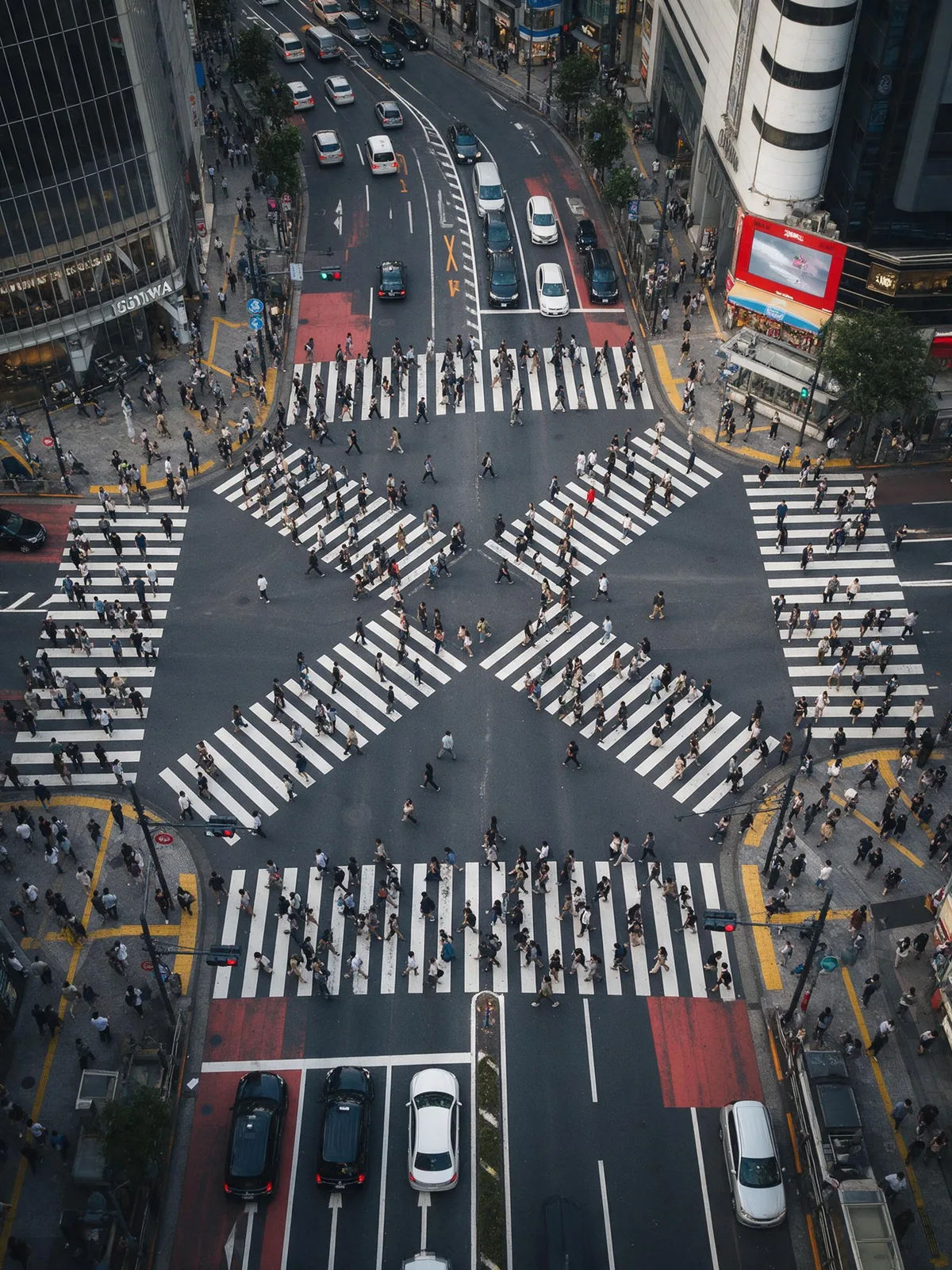
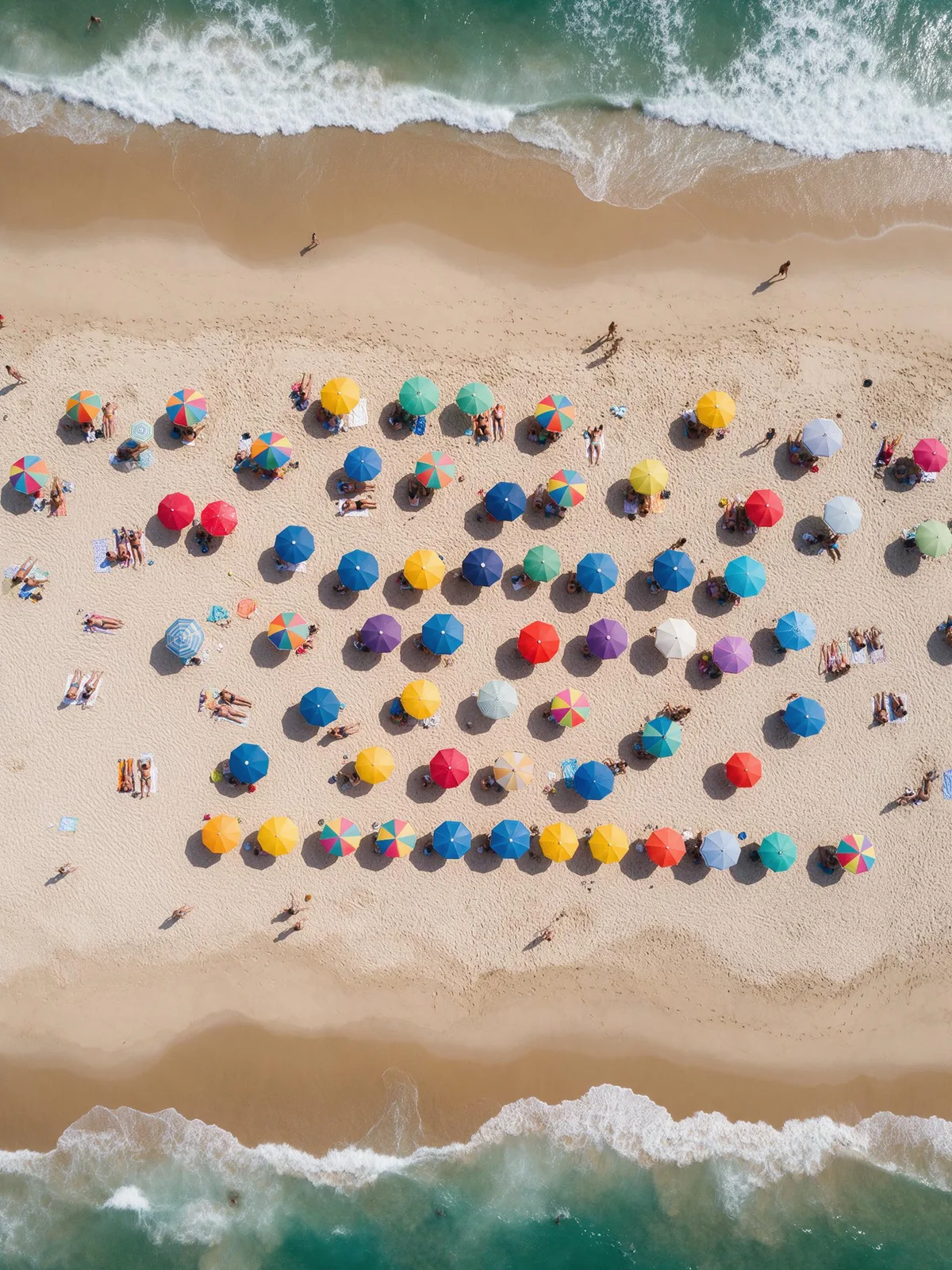

Prompt snippets
A top-down bird's-eye view of a bustling Tokyo intersection, 90-degree angle looking straight down, pedestrians and cars forming geometric patterns, highly detailed, photorealistic --ar 16:9Overhead drone shot, bird's-eye view looking straight down at a dense pine forest, camera slowly panning to reveal a hidden lake in the center, 4k, cinematic lighting.Vertical top-down view, bird's-eye view of a golden wheat field, a red tractor harvesting in the exact center of the frame, strong geometric composition, vibrant colors, 8k resolution, cinematic lighting.Top-down view of a person swimming in a crystal clear turquoise pool, looking straight down, the swimmer creates beautiful white water ripples, bright sunny day.
What it is
Bird’s-Eye View refers to a framing technique where the camera lens points completely vertically downward (at a 90-degree angle), equivalent to observing the ground or subjects directly from above.
Visual and emotional effect
This perspective strips away the three-dimensionality and spatial depth of conventional vision, compressing the 3D world into 2D flat shapes, geometric lines, and color blocks. Emotionally, it conveys a strong sense of objectivity, macro-scale, and order; when used to capture human subjects, it often emphasizes their insignificance, isolation, or sense of fate.
When to use it
It is ideal for showcasing urban block layouts, table-top still life (flat lay), maze structures, and natural landform textures, or for narrative scenes that require portraying characters struggling in a vast environment. It is also frequently used in UI design and game maps to present flat layouts.
Prompt tips
You must use explicit vertical directional terms, such as top-down view, looking straight down, 90-degree angle, or overhead shot. For still life, you can add flat lay. It is crucial to emphasize “vertical”; otherwise, the AI will easily generate a standard diagonal top-down shot.
Common mistakes
- Confusing it with High Angle Shot: A standard high-angle shot is usually at a 30° to 60° downward tilt, which still retains perspective and three-dimensionality; a Bird’s-Eye View must be a strict 90° vertical drop.
- Ruining the flat feel: Forcing strong perspective depth (objects appearing larger in the foreground and smaller in the background) into a Bird’s-Eye View will destroy its unique geometric, flat aesthetic.