Double Exposure
Double Exposure Multiple Exposure Ghost Image
Image StylesA photographic and visual technique that superimposes two or more images, blending them so that a secondary scene is visible within the silhouette of the main subject.
Also known as: Multiple Exposure · Ghost Image
- Midjourney
- Runway
- Kling
- Cursor
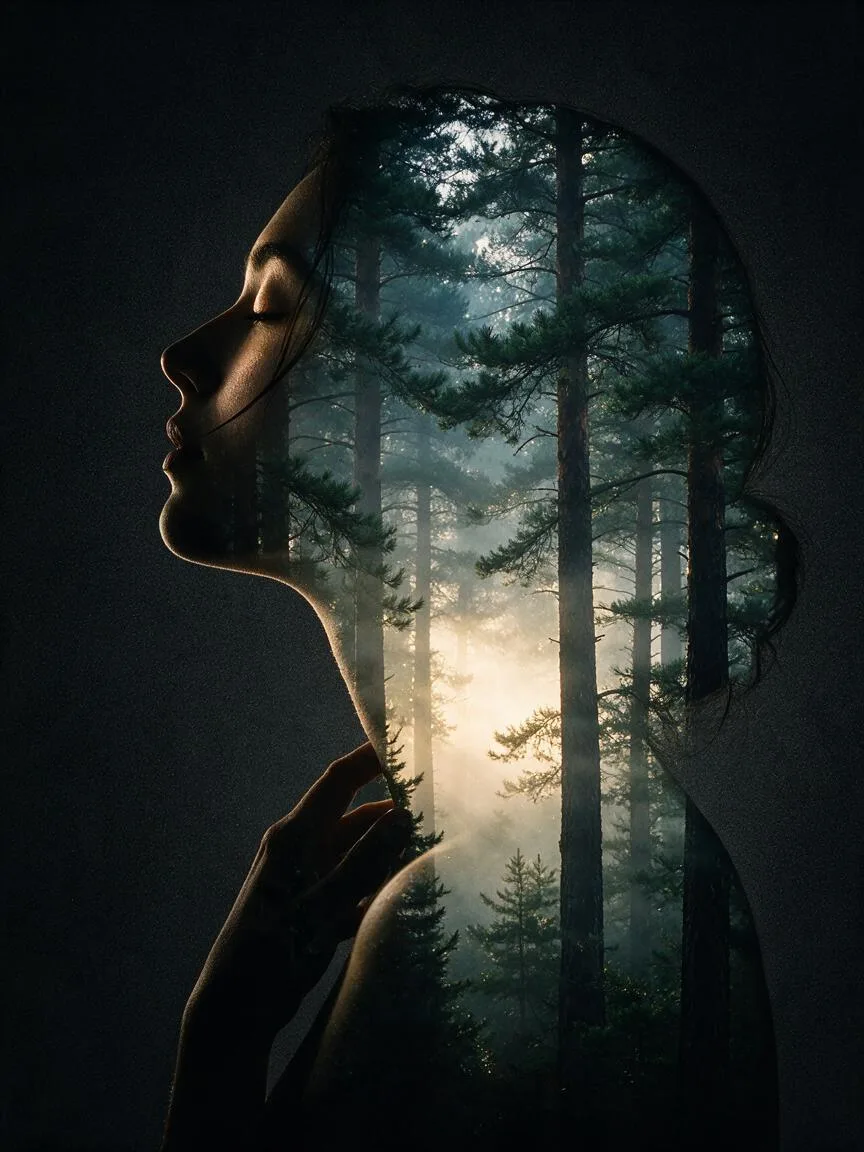
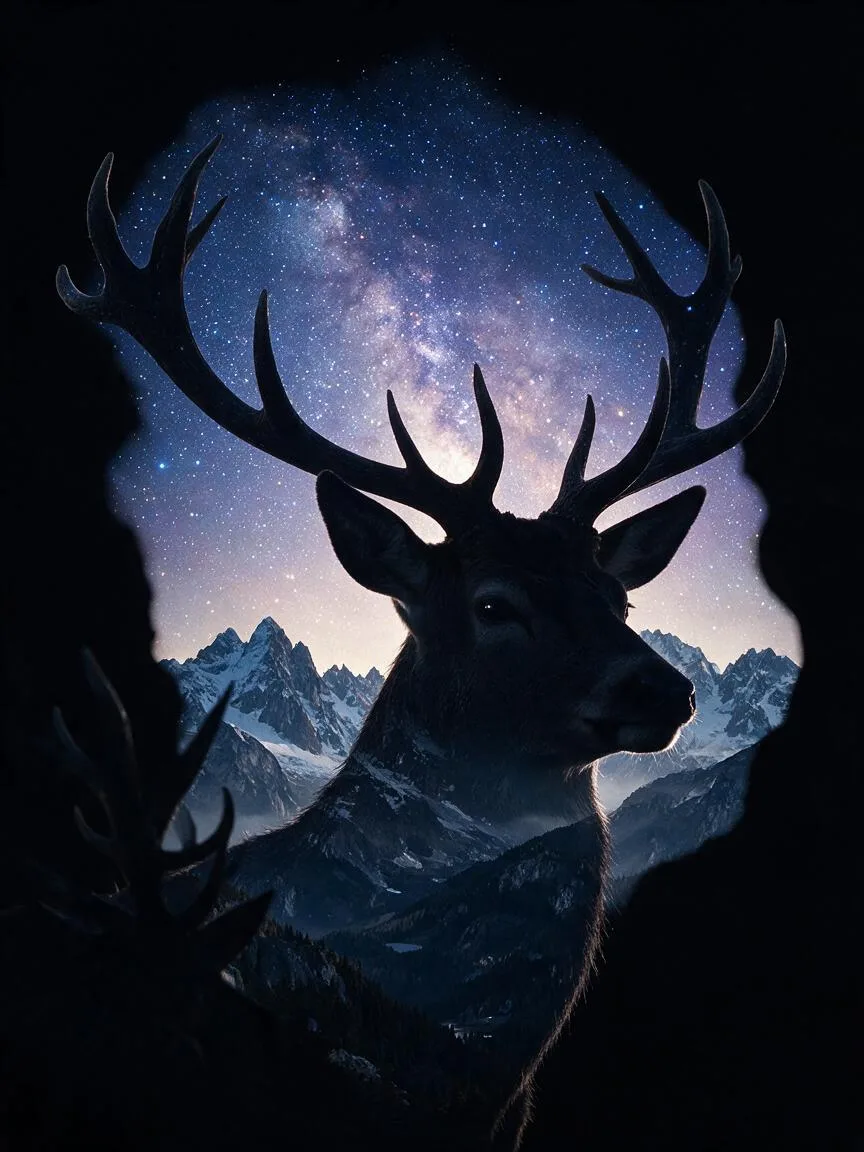
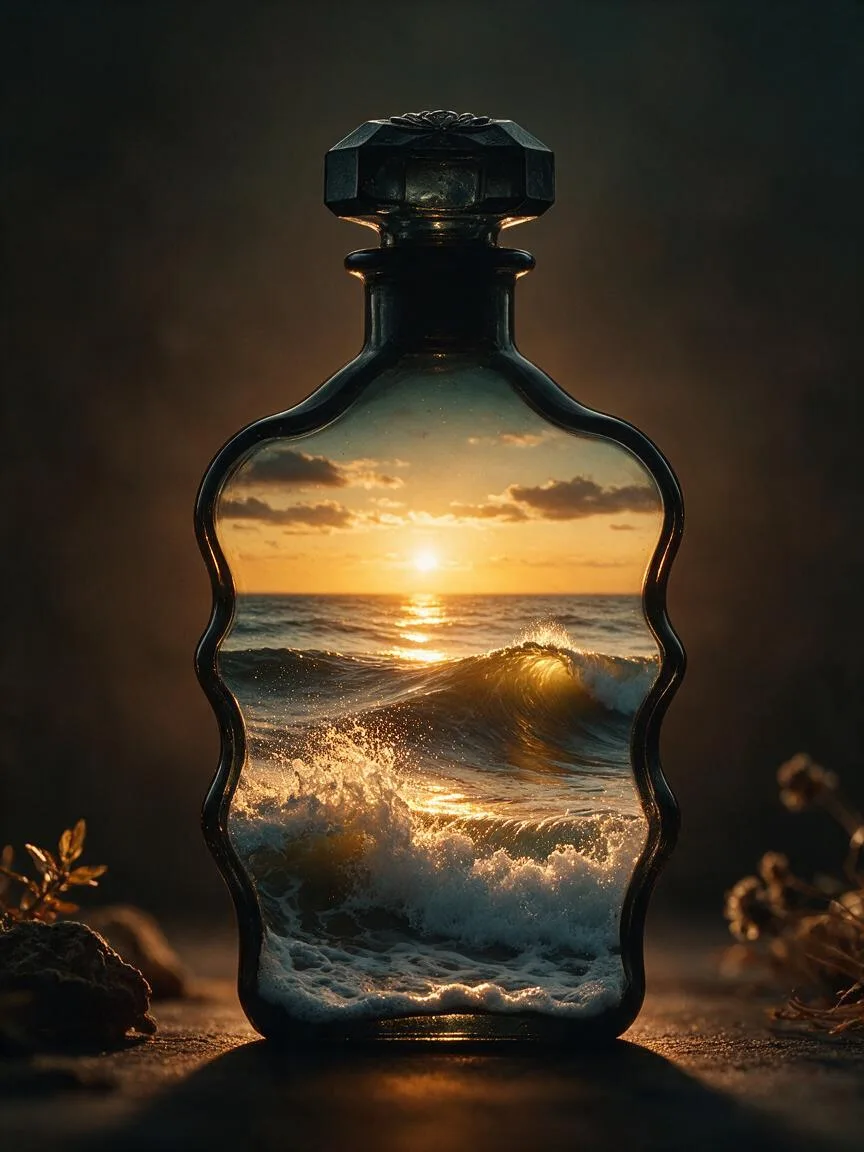
Prompt snippets
double exposure photography of a woman's profile silhouette, inside the silhouette is a dense misty forest with pine trees, cinematic lighting, surreal, high detail, 8k --ar 3:4 --v 6.0Double exposure effect, a majestic mountain landscape seamlessly blending into the side profile of a wolf, slow pan, cinematic lighting, highly detailed, ethereal atmosphereDouble exposure photography, a man's side profile silhouette, inside the silhouette is a vast starry sky and the Milky Way, cinematic lighting, surrealism, high definitionUse CSS mix-blend-mode: screen and multiple background images to create a double exposure text effect. The text layer should have a transparent channel, with a landscape video or dynamic gradient at the bottom.
What it is
Double exposure originated in traditional film photography, referring to exposing the same frame of film two or more times. In the digital era, it has evolved into a visual compositing technique that overlays two or more images using masks or blend modes. It typically features a main subject—often a high-contrast portrait or object silhouette—with a completely different scene (such as a landscape, cityscape, or texture) visible within its outline.
Visual and emotional effect
This technique breaks the constraints of physical space, creating a dreamy, poetic, and surreal visual experience. It uses visual metaphors to establish an intrinsic connection between two unrelated elements, commonly used to express a character’s inner world, subconscious, fragmented memories, or the symbiotic relationship between humans and their environment. The resulting images usually possess strong narrative quality and artistic tension.
When to use it
It is ideal for music album covers, movie posters, concept art, and brand visual designs that need to convey deep emotions or metaphors. When you need to express the interweaving of “inner and outer,” “memory and reality,” or “individual and environment,” double exposure is an excellent choice.
Prompt tips
In your prompts, you must clearly define the hierarchy between the “main subject’s outline” and the “inner scene.” Use silhouette and profile frequently to constrain the subject’s shape, and use superimposed or blended into to describe the overlay action. Additionally, specifying high contrast or cinematic lighting can significantly enhance the clarity of the outline.
Common mistakes
A common mistake for beginners is lacking a clear outline boundary for the subject, causing the AI to generate two separate, side-by-side images instead of a blended one. Furthermore, if the colors and luminance of the two overlaid elements are too similar, the image will blend into an indistinguishable mass, losing the distinct sense of layering unique to double exposure.