Retro Futurism
Retro Futurism
Image StylesAn art style that combines the mid-20th century's optimistic imagination of the future with modern technology, blending Space Age aesthetics with retro elements.
- Midjourney
- Kling
- Runway
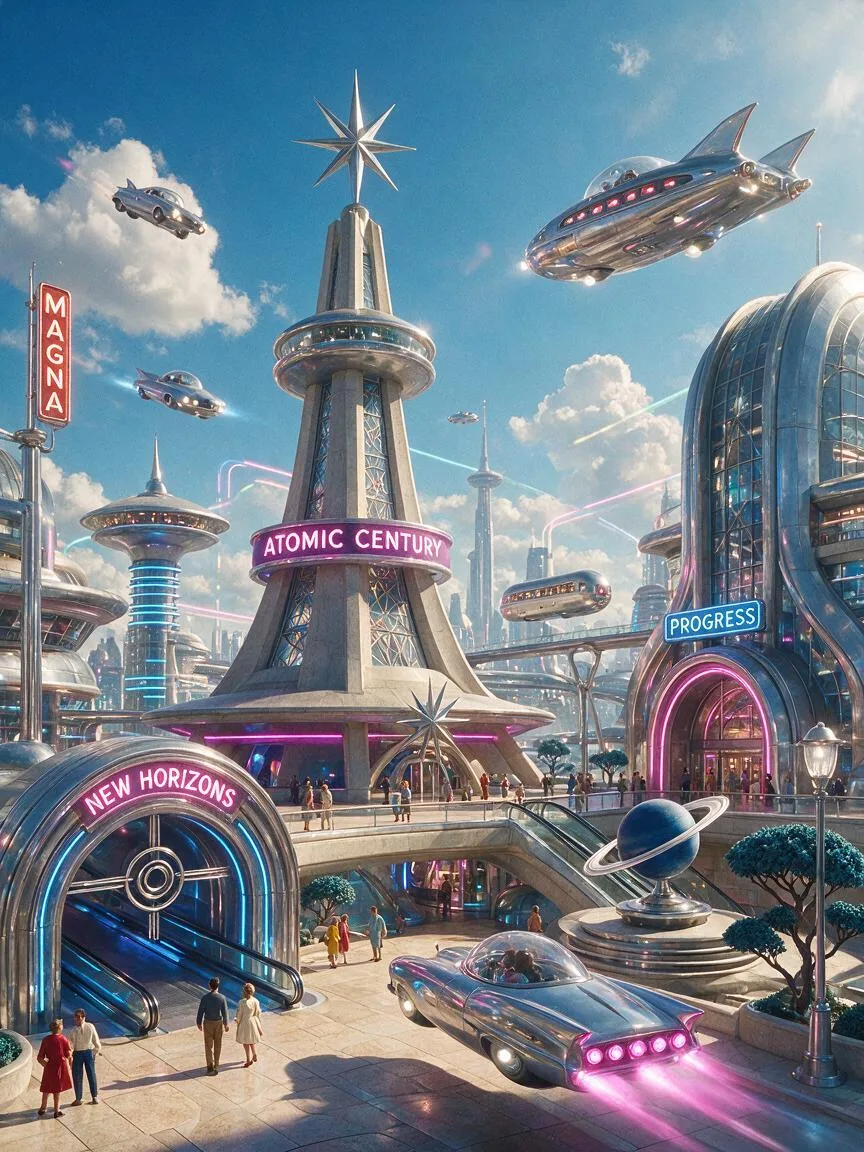
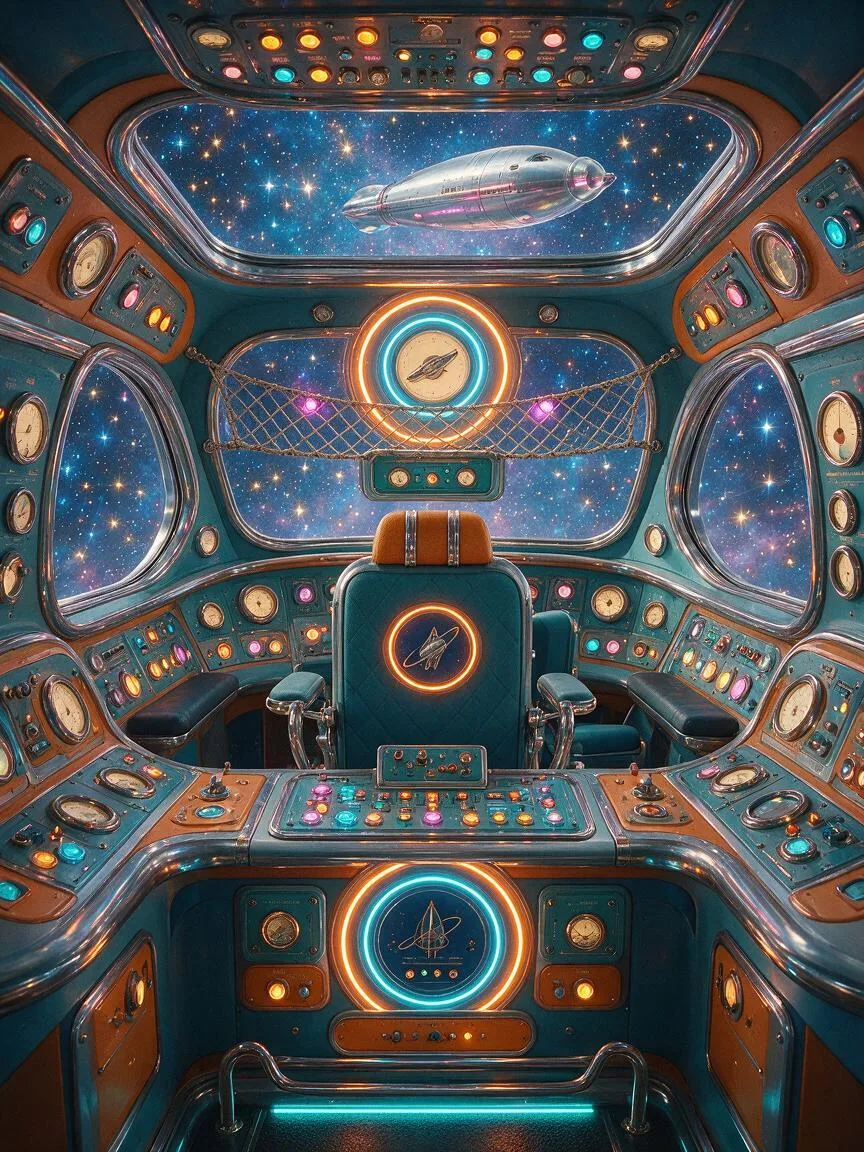
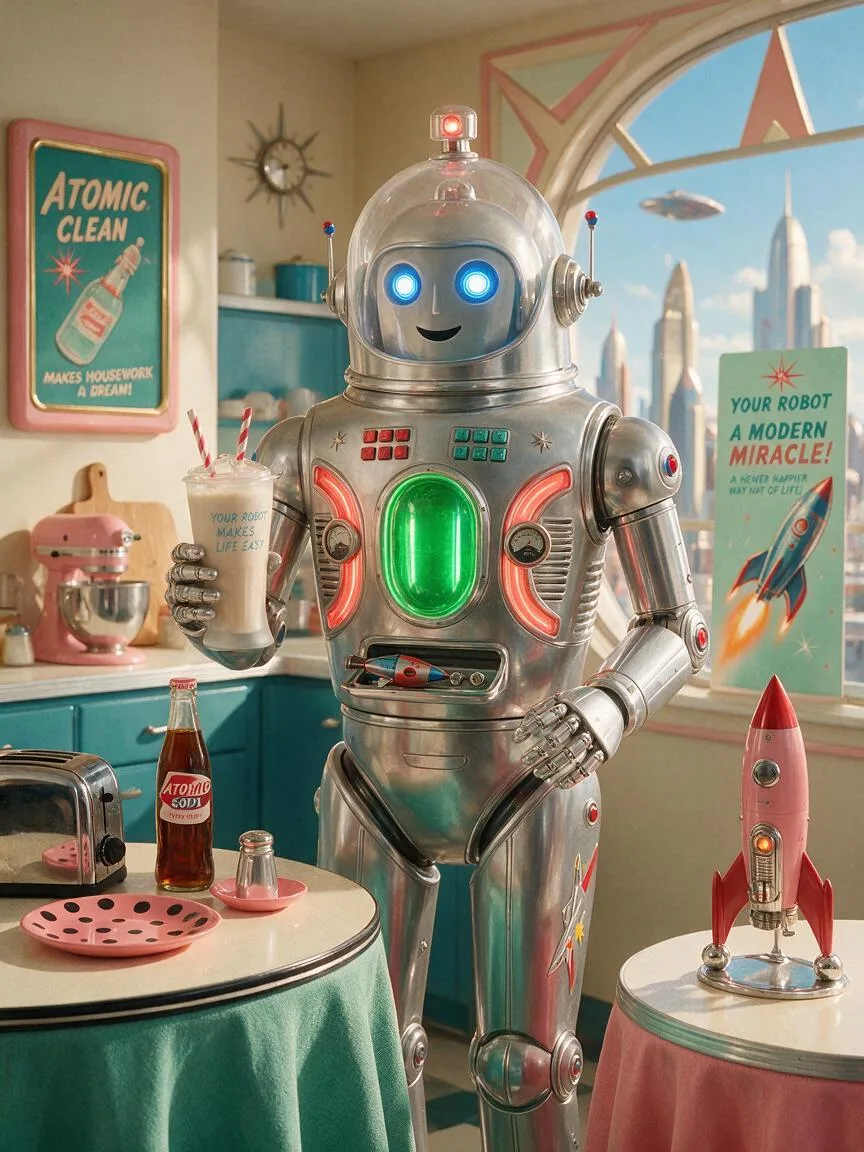
Prompt snippets
A retro-futuristic cityscape, 1950s vision of the year 2000, flying cars with tailfins, atomic age architecture, chrome and neon accents, raygun gothic style, vibrant and optimistic, highly detailed, 8k --ar 16:9 --v 6.0Interior of a retro-futuristic space station, 1950s vision of the future, streamlined metal control consoles, vintage cathode-ray tube screens emitting a dim blue glow, atomic pattern decorations, chrome materials, filled with an optimistic Space Age aesthetic, cinematic lighting, 8k resolution.A retro-futuristic flying car cruising through a utopian city, 1960s pop-up book style, bright pastel colors, sleek aerodynamic curves, atomic age architecture, cinematic lighting, smooth motion.
What it is
Retro Futurism is an art style that combines past visions of the future—typically from the mid-20th century—with contemporary aesthetics. It presents “the future as seen from the past,” blending the Space Age aesthetics, atomic age enthusiasm, and streamlined designs of the 1950s and 1960s.
Visual and emotional effect
Visually, it frequently features streamlined flying vehicles, vintage cathode-ray tube screens, chrome metal finishes, neon lighting, and atomic or molecular motifs. The color palette leans toward highly saturated candy colors or cool tones with metallic sheens. Emotionally, it intertwines a blind optimism about technological progress with a strong sense of nostalgia for a bygone golden age.
When to use it
Ideal for sci-fi concept design, retro-sci-fi game art, nostalgia-themed posters, and brand visuals that emphasize technological heritage and classic legacy. It also works well for illustrations and 3D scenes that need to evoke a sense of temporal displacement.
Prompt tips
Explicitly state the decade (e.g., 1950s, 1960s) to anchor the retro tone, while incorporating futuristic elements (e.g., flying cars, space colony). Using sub-style terms like Raygun Gothic or Googie architecture significantly improves accuracy. Emphasize chrome and neon materials to reinforce the era’s characteristic look.
Common mistakes
It is most easily confused with Steampunk and Cyberpunk. Steampunk is based on Victorian-era steam-powered machinery, and Cyberpunk focuses on a dystopian, dark future; in contrast, the core of Retro Futurism is the past’s optimistic vision of the future, resulting in visuals that are brighter, smoother, and full of Space Age utopian vibes.