Leading Lines
Leading Lines Leading Lines Composition Visual Guidance Perspective Lines Converging Lines
Composition & FramingA compositional technique that uses natural or artificial lines in the frame (such as roads or building edges) to guide the viewer's eye toward a specific subject or deep into the scene.
Also known as: Leading Lines Composition · Visual Guidance · Perspective Lines · Converging Lines
- Midjourney
- Sora
- Kling
- Runway

Prompt snippets
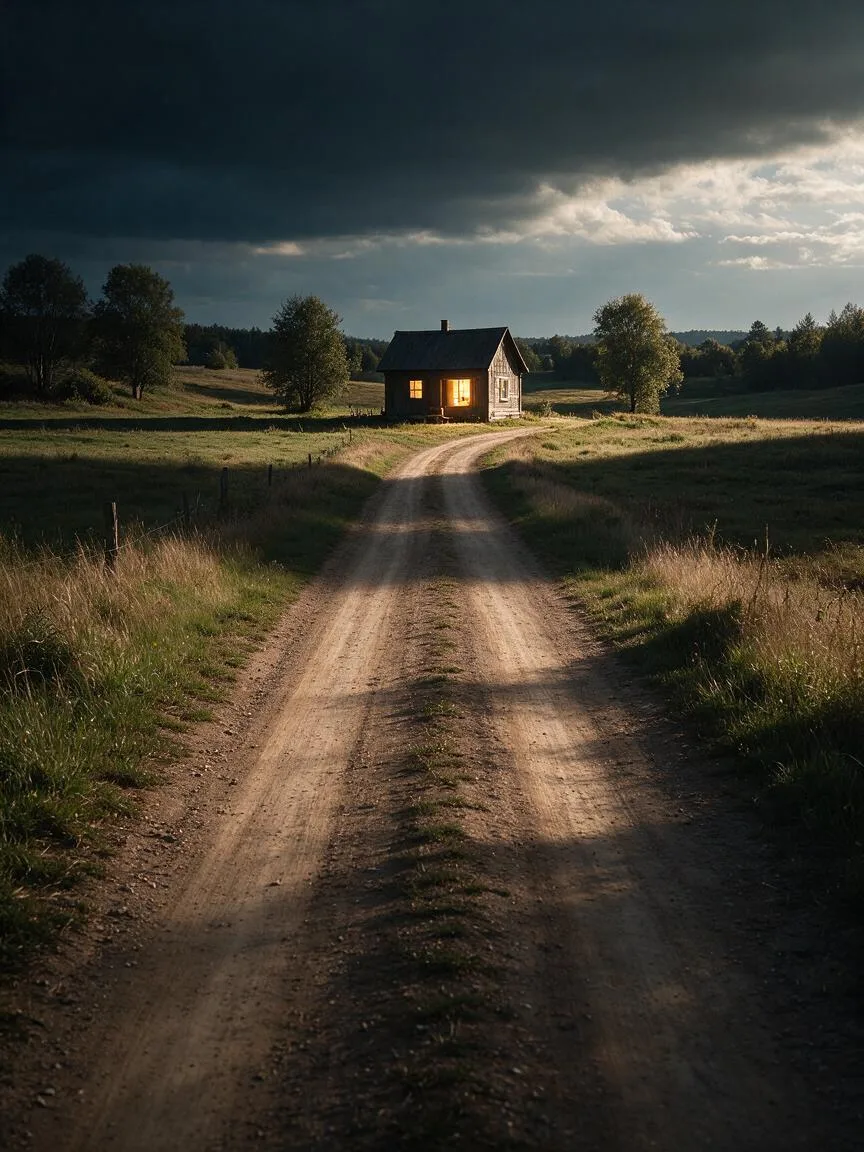
A cinematic shot of a lonely dirt road stretching into the distance, converging lines leading the eye to a single glowing cabin in the background, dramatic lighting, deep depth of field --ar 16:9A drone shot flying forward over a straight highway in the desert, the yellow dashed lines acting as strong leading lines converging at the horizon, sunset lighting, highly detailed, realistic.Tracking shot moving forward along straight vintage railway tracks, the tracks acting as strong leading lines converging into the misty forest deep in the background, cinematic lighting, strong sense of depth.Tracking shot moving forward along a neon-lit cyberpunk alleyway, the wet pavement and building edges creating strong leading lines pointing towards a distant holographic billboard, cinematic, 4k.
What it is
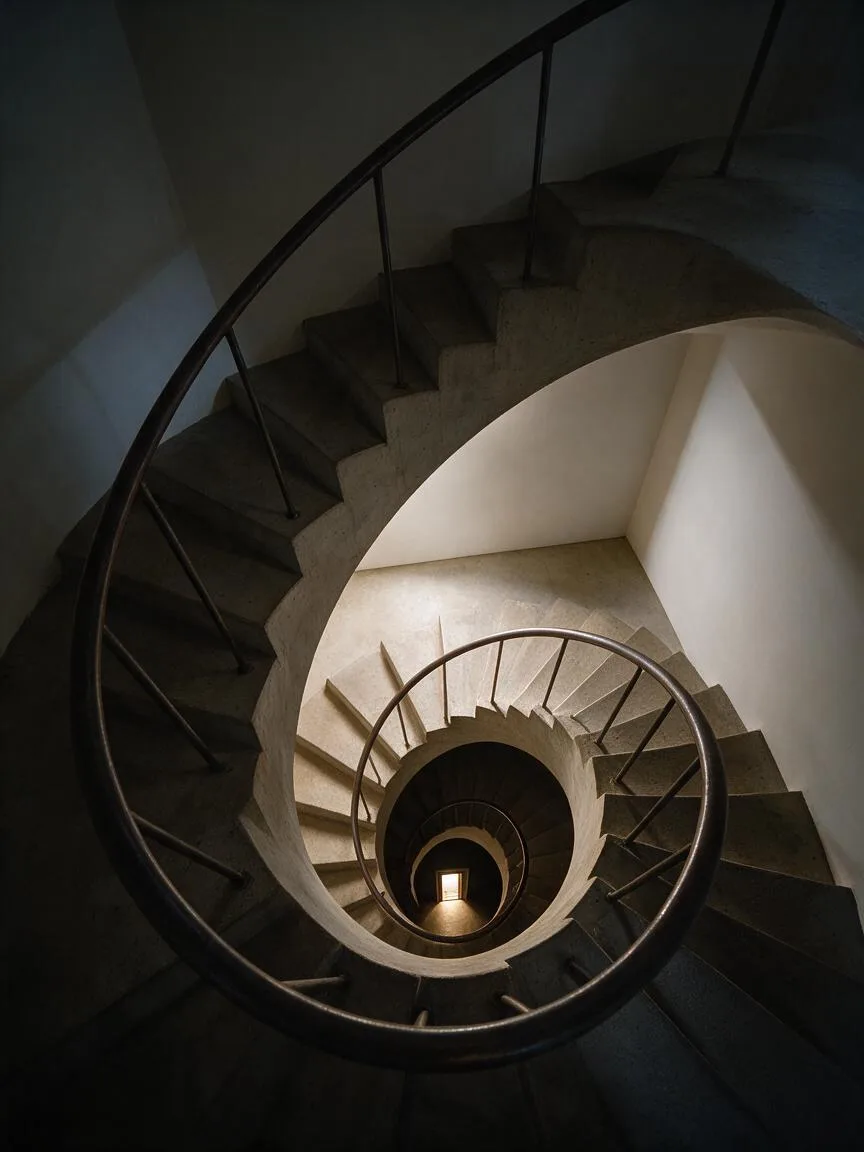
Leading Lines is a compositional technique that uses natural or artificial lines in the frame (such as roads, rivers, building edges, or the boundary between light and shadow) to draw the viewer’s eye from the foreground or edges toward the core subject or deep into the scene.
Visual and emotional effect
Leading lines break the flatness of an image, giving it a strong sense of three-dimensional space. Horizontal lines bring tranquility and stability; diagonal lines inject motion and tension; S-curves create an elegant rhythm. When multiple lines converge at a single point, they create a strong visual impact, forcing the viewer to focus on the subject at the vanishing point.
When to use it
Use this when you need to emphasize the scale of an environment (such as the grandeur of a building or the depth of a street), or when you want to establish a clear visual focus without obstructing the subject. In landscape, architecture, street photography, and various scene concept designs, leading lines are a powerful tool for building compositional order and spatial depth.
Prompt tips
Instead of just entering the abstract term “leading lines”, specifically describe the “physical source” and “geometric direction” of the lines. For example, use a winding river leading the eye to... or strong perspective lines converging at the subject. Combining this with perspective terminology (such as one-point perspective) can significantly enhance the convergence effect of the lines.
Common mistakes
First, cluttered lines where multiple leading lines compete with each other, causing visual distraction. Second, leading lines that direct the eye directly out of the frame, drawing attention away from the subject. Third, lines that are too rigid and straight, lacking perspective variation, which makes the image appear stiff.